Sponsored Links

Wednesday, October 29, 2014

China's ancient homes - Tianluokeng Tulou cluster

Tianluokeng Tulou cluster (田螺坑土楼群) 

The term "tulou" first appeared in a Zhangzhou(漳州) county record dating from 1573, at the time of the Ming Dynasty.

Tianluokeng Tulou in Nanjing County, 160km west of Xiamen City. It takes about two and half hours’ drive from Xiamen along the bumpy and zigzag narrow mountain road. 


Starting in the 4th century, for more than 1000 years the Han Chinese living in the Central Plains region undertook five major migrations. In the face of constant warfare and upheaval, they moved south in search of peace and wealth. In the 13th century, they began settling in the hills and mountains of Fujian, where they formed communities that became known as Hakka. To defend themselves against marauding bandits and the often-hostile locals, they built huge, defensive residences that became known as Tulous. In them, large groups of people, generally belonging to the same clan, could live in safety.


Seen from the outside, a tulou is like a castle. The structure was solid enough to resist attacks from the outside. The walls were formed of rammed mud and clay prepared with a special formula that ensured its longevity. The buildings, by standing the test of time and surviving numerous natural disasters, have shown that they were more than capable of serving the purpose for which they were originally constructed.


Building a tulou, with its enormous size, was highly labour-intensive, and required huge quantities of materials. The fortified outer structure was formed by compacting earth, mixed with stone, bamboo, wood and other locally-available materials. The end result is a well-lit, well-ventilated, windproof, quake-proof building that is warm in winter and cool in summer. 


Tianluokeng tulou cluster (田螺坑土楼群) is one of the better known groups of Fujian Tulou. It is located in Fujian province, Zhangzhou City, Nanjing County, Shuyang Township, Tian Luo Keng Village (literally "Snail Pit" Village) in southern China.


The cluster consists of a square earth building at the center of a quincunx, surrounded by four round earth buildings.


The five earth buildings at the Snail Pit village are:

1. The square earth building named Buyun building(Reaching the Cloud building) at the center of the quincunx. It was the first earth building at this site, built in 1796. It is three storeys high, each storey has 26 rooms, four sets of stairs, and a circular corridor in front of the rooms. 

The Buyun building was burnt down by bandits in 1936, and rebuilt in 1953 according to the original shape. 

2. The Hechang building, a three storey high round earth building, 

3. Zhenchang building, three storey, round shape, 26 rooms per storey, built in 1930 

4. Ruiyun building, built in 1936, 

5. The last Wenchang building of 1966, 3 storeys, 32 rooms per storey. 


The cluster is located about three or four hours drive (depend on traffic) by car/taxi from Xiamen, through winding and bumpy narrow mountain roads (Fujian Provincial Highway 309 (S309), or county roads).

Cost of the whole trip from Xiamen by taxi is about RMB700-800/trip (go, wait, return)


And the entrance ticket RMB100 included for 3 areas : Tianluokeng Tulou cluster (田螺坑土楼群), Yuchanglou (裕昌樓), Taxia Village (塔下村) 


Sunday, September 7, 2014

Mid Autumn Lantern Festival at Guangzhou Cultural Park

The Mid-autumn celebration is one of the most popular festivals in Guangzhou. It is celebrated on the eighth lunar month on the fifteenth day, which coincides with the autumnal equinox. The MidAutumn is a celebration of the harvest season. It marks the prosperity and abundance of food, fruits, grains and vegetables. The moon is worshipped during this festival so that winter may come as soon as possible. People cook a lot of special foods such as moon cakes, taro root, snails and rice cakes on this day.

The light start from 19:00 - midnight for the whole week during the mid autumn festival.

Location : by Metro (Subway) line 6, stop at Cultural Park.


Thursday, August 28, 2014

Halal Restaurant in Hong Kong


Restaurant Name: Islam Food 清真牛肉館
Cuisine: Chinese Halal Food

Tel: (852) 2382 2822
Location: Kowloon City, Kowloon, Hong Kong (please refer to the map below for details)
Recommendations: Veal Goulash and Beef Dumplings

Chinese Islamic Cuisine, is essentially Northern/Beijing influenced Chinese cuisine prepared using Halal methods where the meats are prepared accordingly for consumption by Muslims. This unique cuisine stems from the 1-2% of China’s total population being Muslims. I’m not gonna lie, I had to Google all this and I never even knew this type of cuisine existed until I ate at Islam Food in Kowloon City, Hong Kong. Islam Food is notoriously known for their Veal Goulash, a steaming hot juicy meat pocket! Crunchy and tantalising to the taste buds on the first bite, then juicy, moist and incredibly tasty veal complete this amazing beef cake. The juice oozes out with the bite, and the heat from the pan is still retained in the meat all the way through.


Beef Curry


Veal Goulash !!! Eat with caution, it filled with scorching hot juice.

Beef Soup Dumplings
 
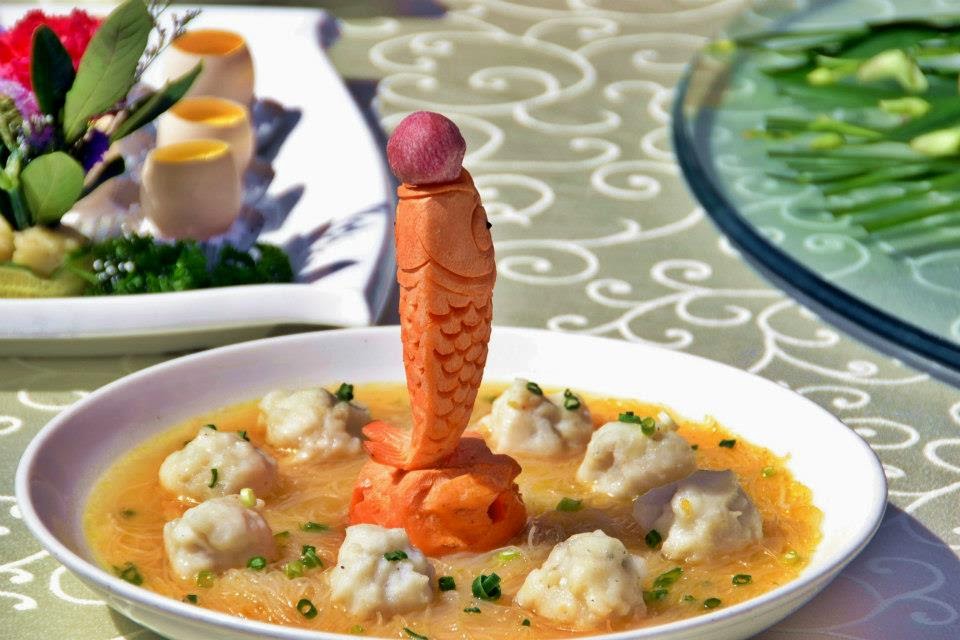
Scrambled egg whites with fish and egg yolk


Islamic Centre Canteen 伊斯蘭中心餐廳

Islamic Centre Canteen offers Halal dim sum at lunch and Cantonese dishes at dinner time. With a sizeable Muslim population in Hong Kong and a steady flow of Muslim visitors from Southeast Asia, halal dim sum will surely make Muslim travelers at ease.

Address : 5/F, Masjid Ammar and Osman Ramju, No. 40, Oi Kwan Road, Wan Chai
地址 : 灣仔愛群道40號伊斯蘭中心5樓

Opening Hours : Daily 9am to 9pm.
Getting There : MTR Causeway Bay – Exit A. Walk to Wan Chai Road. Walk straight and turn left to Tak Yan Street & turn left to Oi Kwan Road. It would be easier if you have a map along.
Price : Below USD10 / RM33 per person ( dim sum )


Monday, August 11, 2014

Top 3 Most Expensive Chinese Food


Bird's nest

Edible bird's nests are among the most expensive animal products consumed by humans, with an average nest selling for $2,500 per kilogramme for end-consumers in Asia.

The Chinese name for edible bird's nest, yàn wō (燕窝), translates literally as "swifflet nest", and often serves as a synonym for bird's nest soup. However, yàn wō strictly speaking is the uncooked nest.

The nest is harvested heavily as it is believed to contain rich nutrients to aid in digestion, increase your libido, improve awareness and overall a boost to the immune system. That’s a lot of bold claims and whether any of these are true or not, these nests have been consumed in China for over 400 years.

The improvement was due to the stimulation of body functions and hormones that need to be at healthy levels for optimal reproduction. More controlled testing still needs to be done to further confirm or rebut these studies.

Read more : http://www.ehow.com/list_6578966_bird_s-nest-soup-benefits.html
One of the traditional benefits attributed to bird's nest soup has been aiding reproductive health.

Read more : http://www.ehow.com/list_6578966_bird_s-nest-soup-benefits.html
One of the traditional benefits attributed to bird's nest soup has been aiding reproductive health.

Read more : http://www.ehow.com/list_6578966_bird_s-nest-soup-benefits.html
Due to its alkalinity, and the epidermal growth factors, it promotes cells growth and research is going on to discover and identified markers for anti-cancer elements. Till today, Chinese still believed edible nest soup is good for treating tuberculosis, dry coughs, asthma and many general weakness due to bronchial aliments. Traditionally edible nest soup is used to nourish the kidney, lung, heart and stomach. The tonic power of edible bird's nest soup is believed to improve skin complexion and slow down the aging process.
The improvement was due to the stimulation of body functions and hormones that need to be at healthy levels for optimal reproduction. More controlled testing still needs to be done to further confirm or rebut these studies.

Read more : http://www.ehow.com/list_6578966_bird_s-nest-soup-benefits.html

One of the traditional benefits attributed to bird's nest soup has been aiding reproductive health.

Read more : http://www.ehow.com/list_6578966_bird_s-nest-soup-benefits.html


Braised whole Abalone

Abalone is a mollusk that clings to rocks and grazes on seaweed. Chinese, have classified abalone with the likes of sharks fin, ginseng and bird’s nest as some of the most desirable, and expensive foods.
The high price of these ingredients often makes them status symbols, reserved for celebrations. The taste of abalone is similar to scallops when tenderized before cooking.
Expert believes that abalone may help prevent and treat debilitating health conditions including arthritis.
It is believed to promote healthy eyes, alleviate colds, reduce fluid retention and improve circulation.


Shark Fin Soup

Shark fin soup (or shark's fin soup) is a popular soup item of Chinese cuisine usually served at special occasions such as weddings and banquets, or as a luxury item in Chinese culture.
Eating shark fin soup has become a tradition in Chinese culture to celebrate important events and is considered beneficial for some diseases.
Based on Chinese medical book known to benefit from this shark fin include skin rejuvenation, increased appetite, useful for energy, for kidney, lung, bone and other body parts.
Presumably these health benefits derived from shark fins and snout made of cartilage. Sharks are known to have strong resistance to infection and immunity against cancer.


Saturday, August 9, 2014

The Heaven on Earth, Jiuzhaigou

It's about 3 hours flight from Guangzhou city by plane to Huang Long airport, quite a bumpy ride before landing with amazing snow mountain view.


It takes another 2.5 hour to Jiuzhaigou valley (九寨沟) area by car/taxi from the airport (RMB 300 one way from airport to your destinate hotel at Jiuzhaigou area)
or you can take small bus/van to Jiuzhaigou with around RMB 45/person, the car will departure after it full and stop at one spot at jiuzhaigou, and they asked you to change to a (free) taxi to your hotel (depend your hotel location).


Lying on the highest tableland in the world between the Sichuan Basin and the Qinghai-Tibetan Plateau, Jiuzhaigou Valley covers altitudes ranging from 2,000 meters (6,561 feet) to about 4,300 meters (14,107 feet).


With large number of lake groups, waterfalls and rich variety of endangered plants and fauna, it was awarded the status of UNESCO Man and Biosphere Reserve in 1997 and was also recognized as a UNESCO World Heritage Site in 1992. The reserve has received a string of other titles including that of a National Geological Park, a AAAA Class Scenic Spot in China and a Green Globe 21.


With some of the most beautiful and inspiring scenery on earth and some of the reserves scenic spots considered holy by the local Tibetan and Qiang people, it is no wonder a number of mysterious legends surround the wonderful landscape of Jiuzhaigou. Many people are drawn to the area for these reasons, and with the park open all year round the authorities have ensured that the fragile environment is sufficiently protected with a range of comprehensive facilities.


Travel inside Jiuzhaigou Park : 
You will be shuttle/walk for the trip. There is a tour guide on each shuttle. She/he will tell you what’s the next point. Instructions are very clear. The entire valley is Y shaped. The schedule shuttle route goes all the way to the top (Long Sea) on upper left branch without a stop, makes you walk about 1 mile to a pond (Five-Color Pond), and then you can take shuttle there, which goes directly to the center of the Y point. There you change to the shuttle goes to the top upper right branch. From there, you will be on and off bus to visit each point of interest on the way back to entrance. The Pearl Shoal is the most beautiful part. Five-Flower Pond is also very nice. Mirror Pond will be nice on a sunny day.


Sacred fish at Jiuzhaigou :
Songpan naked carp fish is regarded as the water spirit of Jiuzhaigou and never caught for human consumption.

The fish in Jiuzhaigou are very unique. They're high altitude fish, so they survive on a lower oxygen content, and thus grow very slowly (about a cm a year).

Tibetan culture have burial traditions in which children who pass away are buried in the water. Adults may sometimes be water buried, but generally, they follow other traditions--sky burial or cremation--but water burial is exclusively reserved for children. Because fish feed on the pieces of flesh, it is believed that fish carry the souls of their children, so Tibetans do not eat fish.


Note : One thing you better avoid to go to Jiuzhaigou (or any travel palces in China), don't go during the public holiday!!! you will end up with long que everywhere you go.

it's a convenient thing if you keep one of taxi driver phone number, so you can arrange them to come to your hotel as per your own schedule. (especially go to airport if you have morning flight, it's worth to take another 3 hours sleep in the car )


HORSE RIDING
you can ask a taxi driver to take you for horse riding, it's a good experience to see Tibetans village and their culture. Rates for 1 hour horse riding to the hills & village is around RMB100/person (not include tips)


Yak is a precious animal to the Tibetan. Beside milk, fibres and meat obtained from them, they are also used to carry goods across mountain passes. Their milk is often made into cheese and butter, which goes into butter tea that Tibetans love to drink.


Food 
So you cannot help wondering why when you are actually in Sichuan, you could not find good or authentic Sichuan food in Jiuzhaigou, so food at the hotel is one of the best choice.


Sour and Spicy Chicken

Boiled Yak Beef Meat with Peanut

(Dong chong xia cao) Caterpillar fungus, aweto, cordyceps, "winter worm, summer grass"
Aweto, a world-famous tonic, is found in plateaus around 3,000-5,000 meters above sea level. Though it also grows in Qinghai, Sichuan and Yunnan provinces, those from the Tibet Autonomous Region are believed to be the most effective.
Aweto is a fungus growing from the dead larva of a white ghost moth. It has been used to treat cancer, boost immunity and generally increase energy and
promote healing and recovery from illness. It is "neutral" in energy nourishes the lungs, helps eliminate phlegm and benefit the kidneys

Yak meat & BBQ snacks at small shops around hotel

DICO's at the park entrance, similar to KFC/Mc D's - it's not bad for fast food lovers. 

Sichuan Cold Noodle for RMB10/cup

HUANGLONG VALLEY 
The 'World Wonder' and 'Fairy Land on Earth' are names enjoyed by the Huanglong Scenic and Historic Interest Area, which is well known for its colorful lakes, snow clad mountains, valleys and virgin forest.


The scenic area is located in Songpan County, in the northwest part of Sichuan Province and encompasses the Huanglong and Muni Valley.
Opening Hours : 08:00 - 17:00


HUANGLONG AIRPORT
The Huang Long airport 九寨沟机场; is consider as the 9th highest altitude airport in the world. (3448 m above sea level) it's the 3rd highest airport in China.